


In recognition of its efforts to support educational opportunities for aging adults and foster intergenerational connections, St. Catherine University has received the Age-Friendly University (AFU) Designation and joined the Age-Friendly University Global Network.
“Joining the Global Network as an Age-Friendly University is a natural fit for St. Kate’s, whose mission calls for valuing human dignity at every stage of life,” said President Marcheta P. Evans, PhD. “The network offers an opportunity for our community to learn from the best practices of fellow member institutions and to share models of intergenerational research and service-learning.”
The designation honors the breadth of the work across the University to create age-friendly environments where community members of all ages feel valued. This commitment at St. Kate’s is both integrated into the curriculum and present in a range of co-curricular and community activities both on and off campus.
“By joining this Global Network, our institution demonstrates leadership in advancing research, programs, and partnerships that value the contributions of older adults and promote a culture of belonging across generations,” said Melanie Homan, OTD, associate professor in the Graduate Occupational Therapy program. “This milestone marks an important step forward in our shared mission to create academic communities where individuals of all ages feel valued, respected, and empowered to thrive.”
“As a new dean at St. Kate’s, one of the things that has impressed me most is how much extraordinary work is already happening across the University and in partnership with our community,” said Aimee Zellers, PhD, dean of the School of Liberal Arts, Business, and Leadership. “This designation gives us an opportunity to connect and build on that work, creating even more meaningful opportunities for learning, research, and engagement across generations.”
The age-friendly designation formalizes a long-held commitment at St. Kate’s, practiced through academic programs, community partnerships, and intergenerational engagement, and continues the work of creating a culture that values the unique contributions of aging and remains a welcoming place for all. A cross-campus committee of faculty and staff, led by faculty members Homan and Josh Guggenheimer, PhD, worked on the application for several months, collecting and sharing the many ways St. Kate’s is involved in and committed to this effort.
Community Partnerships
St. Kate’s impact in the community has been recognized with the Carnegie Classification for Community Engagement designation, and the University’s collaboration with nonprofits serving older adults is no exception.
A couple of examples include partnerships with:
- Elders Lodge: Healthcare (physical therapy and occupational therapy) and nursing students partner with residents of Elders Lodge, which houses primarily older Native American adults, to provide education and care at the Wisdom Wellness volunteer-run clinic.
- Presbyterian Homes (including Carondelet Village): Occupational therapy students complete one-on-one senior fitness assessments and fall-risk education, and work with a program that supports students learning from elders. Occupational therapy students also do home visits in the community and make home modification recommendations in partnership with Rebuilding Together Minnesota.
On-campus Intergenerational Connections
Students at St. Kate’s have diverse opportunities to learn about and engage in intergenerational work, including academically through a longevity and aging minor. This interdisciplinary minor engages students in preventing and addressing health disparities that accumulate in ways that inequitably accelerate aging. Through projects in the St. Kate’s Women’s Health Integrative Research Center, students with this curricular base have collaborated on several interventional studies aimed at increasing mobility and vitality across the lifespan.
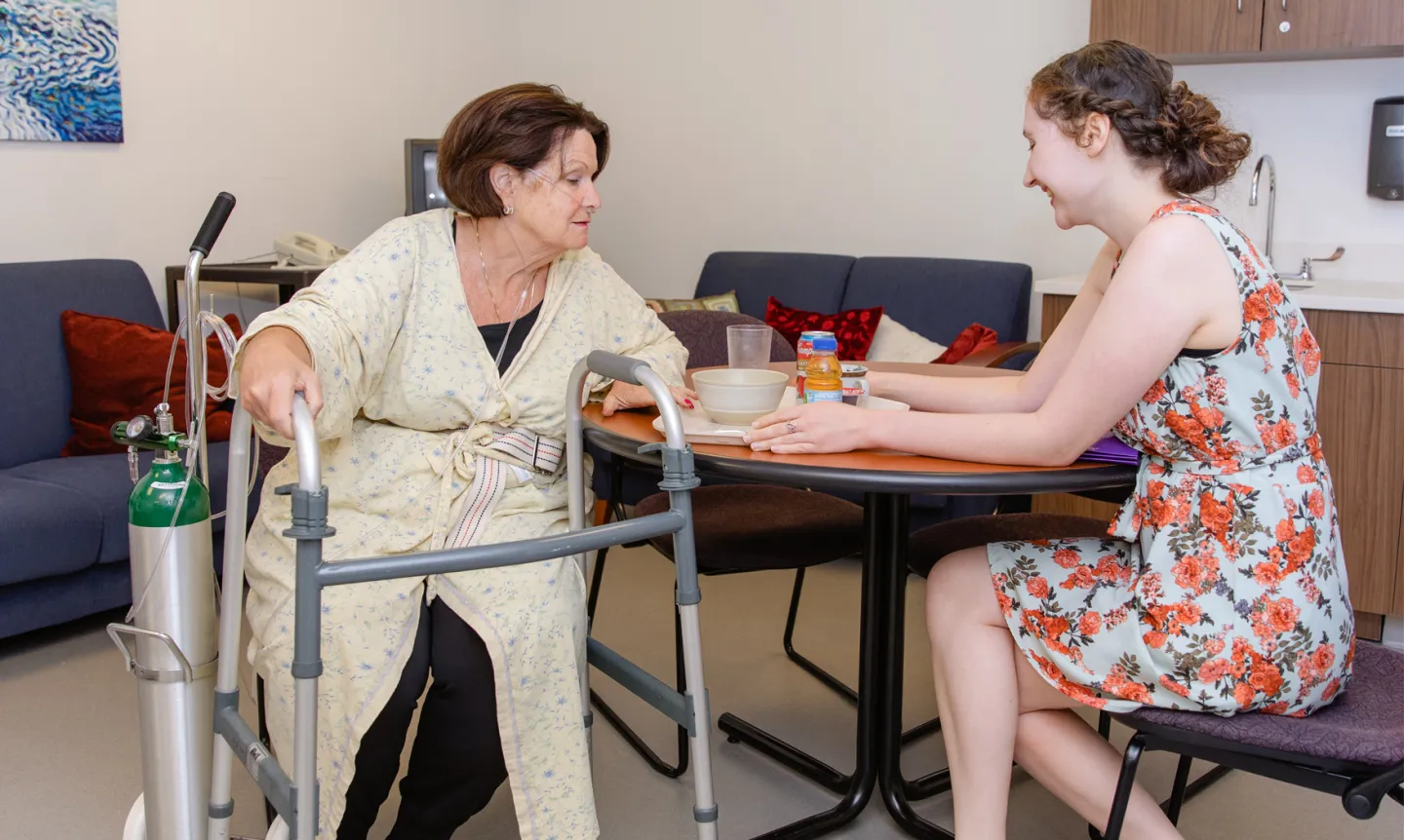
Around campus, opportunities like the Chapel Choir bring together students, alumni, and older adults from the community to build intergenerational connections. At the Institute of Simulation and Interprofessional Learning (I-SAIL), community members of all ages volunteer as simulated patients for health care simulations and give students valuable hands-on experience working with older adults.
This coming year Homan, Zellers, and D’Ann Urbaniak Lesch, assistant vice president for engaged learning and employer & community partnerships, will work to coordinate, direct, and align these and other initiatives across campus and with community partners.