


On January 12, the American Council on Education and the Carnegie Foundation for the Advancement of Teaching announced that St. Catherine University was selected as having met the criteria for the 2026 Carnegie Elective Classification for Community Engagement.
The classification recognizes the University’s institutional commitment to community engagement. In its selection, the Carnegie Elective Classification celebrated St. Kate’s for its ongoing work deepening community partnerships and tackling societal challenges.
St. Kate’s is one of 237 institutions nationwide selected for this recognition this cycle. The University is one of eight institutions in Minnesota and one of three private colleges in the state to earn the classification, which will remain in place through 2032. St. Kate’s first received the classification in 2015, then one of only 36 private colleges and universities across the nation to achieve this recognition.
“We celebrate each of these institutions, particularly their dedication to partnering with their neighbors — fostering civic engagement, building useable knowledge, and catalyzing real world learning experiences for students,” said Timothy F.C. Knowles, president of the Carnegie Foundation.
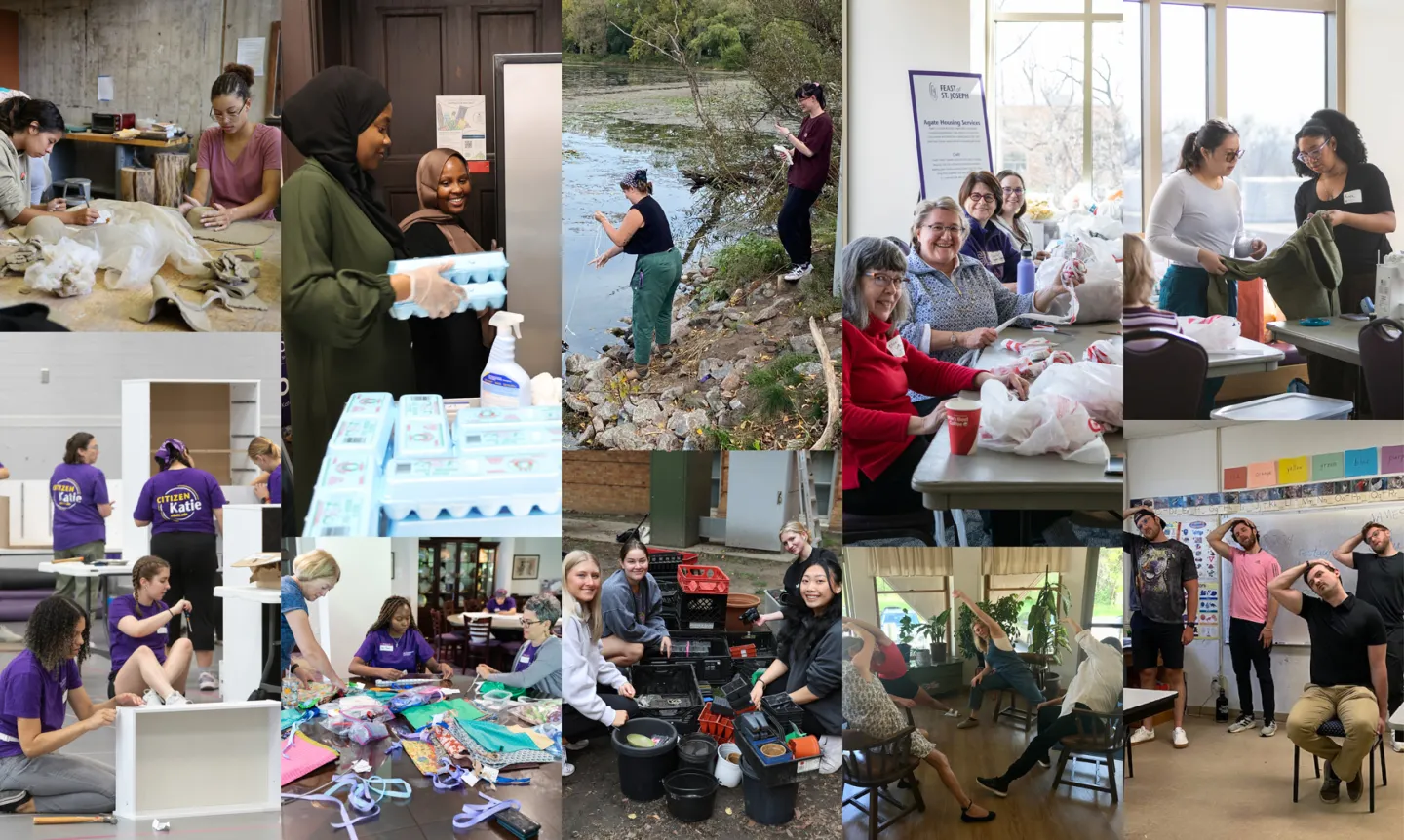
Community engagement is an integral part of St. Kate’s. The institution collaborates with communities through courses, clinicals, field work, practicums, student employment, volunteering, and civic engagement like voting and dialogue. Community-engaged learning at St. Kate’s is supported by Community Work and Learning (CWL), which celebrated its 25th anniversary in fall 2025. CWL is part of the Office of Scholarly Engagement (OSE), which is also home to the Antonian Honors program, collaborative research, competitive fellowships, and global studies. For the past four years, community-engaged learning has also been integrated into the curriculum through The Reflective Women, an introductory course required for most undergraduates.
Through partnerships with community organizations, St. Kate’s students, faculty, and staff live out the University’s commitments to scholarly inquiry and social justice. One ongoing project, Welcoming the Dear Neighbor?, is a collaboration with Mapping Prejudice, housed within the University of Minnesota Libraries, that examines the history and impact of housing discrimination in Minnesota. St. Kate’s Welcoming the Dear Neighbor? project brought the collaborative effort to Ramsey County and for the past eight years has co-led building the map of racial covenants, and connected research and education. It was honored in 2024 with the Uniservitate Global Service-Learning Award by Uniservitate, a global program for the promotion of solidarity service-learning (SSL) in Catholic higher education institutions.
St. Kate’s Civic Engagement efforts is another community-engaged initiative housed under CWL and activated across and beyond campus. Democratic efforts such as voter education and access as well as advocacy and dialogue have been important elements of the St. Kate’s experience. The St. Kate’s Civic Engagement Fellowship, started by Newman Fellow Zaynab Abdi '20, is a student leadership program which allows fellows to collaborate on projects that encourage democratic participation across campus and take an active role in civic engagement. The University’s ongoing collaboration with Twin Cities Public Television (TPT), in particular focusing on voting and women’s leadership, has had a tremendous impact. From work on the film Citizen, celebrating the suffrage centennial, to the TPT Mix Tape event at The O’Shaughnessy, St. Kate’s has engaged in deep learning while influencing current knowledge and work.
One notable clinical collaboration between the School of Nursing, the Henrietta Schmoll School of Health Sciences, and the community led to the establishment of the Rise Up Health Clinic in 2020, located in the White Bear Lake Area High School. This video highlights St. Kate’s leadership in this area, providing accessible healthcare in and for the community while serving as a practice site for St. Kate’s faculty and clinical site for interprofessional healthcare students.
“These examples are just a few of the many ways the St. Catherine University community is learning from and working with the communities we are part of and can contribute to in the every day,” said D'Ann Urbaniak Lesch, assistant vice president for engaged learning and employer and community partnerships. “The depth of individual and collective efforts is profound and cannot be understated. This work is embedded in a St. Catherine education in a multitude of ways that we believe will support our students in leading and influencing as they learn and then graduate from St. Kate’s.”
About the Carnegie Classifications
The Carnegie Classifications are the nation’s leading framework for categorizing and describing colleges and universities in the United States. Utilized frequently by policymakers, funders, and researchers, the Classifications are a critical benchmarking tool for postsecondary institutions. ACE and the Carnegie Foundation announced a partnership in February 2022 to reimagine the Classifications to better reflect the diversity of postsecondary institutions and more completely characterize the impact that today’s institutions have in society.